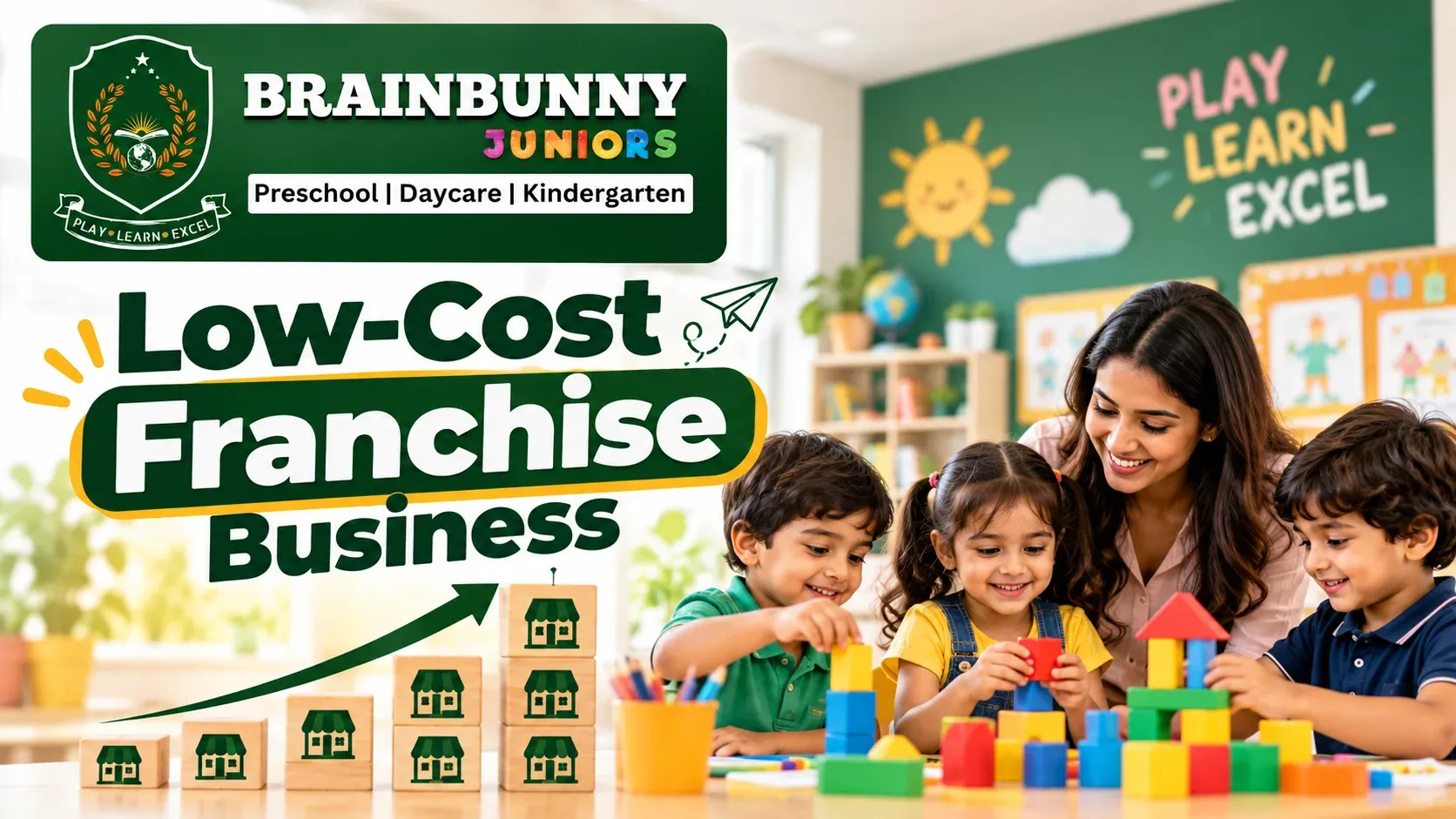
Starting a business is an important financial decision, especially for first-time entrepreneurs who want to manage their investment carefully. A low-cost franchise business in India can be worth exploring if you want to operate under an established brand, follow a defined business model and access training or operational guidance.
However, choosing the right franchise requires more than finding the lowest advertised investment. You need to understand the total setup cost, recurring expenses, location requirements, business responsibilities, support provided and the demand for your services.
For entrepreneurs interested in education, a preschool or daycare franchise is one category to evaluate. BrainBunny Juniors offers a preschool franchise model with support across setup, curriculum, training, marketing and operations, subject to the applicable franchise arrangement.
This guide explains how to compare low-investment franchise opportunities, estimate your budget, evaluate business models and decide whether a preschool franchise fits your goals.
Quick Answer: What Is a Good Low-Cost Franchise Business in India?
A suitable low-cost franchise business is one whose total investment, ongoing expenses, operating requirements and local demand fit your financial capacity and business objectives.
Entrepreneurs can explore categories such as education, preschool and daycare, food and beverage, retail, home services and selected professional services. Each category has different startup costs, staffing needs, operating risks and revenue models.
Before choosing, compare:
- Initial franchise fee and total setup investment
- Property, equipment and infrastructure costs
- Training and operational support
- Recurring fees and working capital
- Local competition and customer demand
- Franchise agreement and territory terms
- Realistic revenue assumptions and operating expenses
If you are interested in early childhood education, a preschool franchise may be worth considering. BrainBunny Juniors currently lists an indicative investment of ₹12–18 lakh and a space requirement of 1,500–2,500 sq. ft. These figures are specific to its published franchise information and should be reconfirmed with the team before making a financial commitment.
What Is a Low-Cost Franchise Business?
A low-cost franchise business is a franchise opportunity designed to operate with a comparatively manageable initial investment. The actual amount depends on the brand, business category, location, property requirements, equipment and services offered.
A franchise arrangement generally allows a franchise partner to operate under a company's brand and business systems in accordance with an agreement.
Depending on the business, the franchisor may provide:
- Brand identity and usage guidelines
- Training and onboarding
- Operating procedures
- Equipment or setup specifications
- Marketing resources
- Technology or administration tools
- Product, service or curriculum guidance
- Ongoing business support
The franchise partner usually remains responsible for local operations and the expenses specified in the agreement.
Important: A low franchise fee does not necessarily mean a low total investment. Property deposits, interiors, staff salaries, marketing and working capital can add substantially to the initial budget.
Types of Low-Investment Franchise Businesses in India
There is no single franchise category that is best for every entrepreneur. The right option depends on your interests, experience, financial resources and local market.
| Franchise category | What to evaluate | Suitable for |
|---|---|---|
| Preschool franchise | Property, learning environment, staff, curriculum and admissions | Entrepreneurs interested in early education |
| Daycare franchise | Space, staffing, operating hours and supervision | Entrepreneurs interested in childcare services |
| Food and beverage franchise | Equipment, inventory, location and daily operations | Operators interested in food service |
| Retail franchise | Inventory, rent, supply chain and customer demand | People interested in product sales |
| Home-service franchise | Service delivery, staff, equipment and local marketing | Entrepreneurs interested in service businesses |
| Education or training franchise | Curriculum, instructors, learning resources and student acquisition | People interested in education or skill development |
| Selected professional services | Equipment, skills, service demand and business requirements | Entrepreneurs with relevant operational capability |
These categories are starting points for research, not a verified ranking of the cheapest franchises. Investment varies widely by brand and location. Request actual cost breakdowns before comparing opportunities.
Why Consider a Preschool Franchise?
A preschool franchise may suit entrepreneurs who are interested in education, early childhood development and building relationships with families in their local community.
Compared with starting an independent preschool, a franchise may offer access to an established brand, learning resources, training, setup guidance and operating procedures. The exact benefits depend on the franchisor and agreement.
However, running a preschool is an ongoing responsibility. It involves staff management, parent communication, admissions, suitable facilities, child safety and compliance with applicable requirements.
It is important to assess both the business opportunity and the responsibilities of operating an early learning centre.
How Much Investment Is Needed for a Low-Cost Franchise in India?
The investment depends on the business category and the specific franchise package. A headline franchise fee may cover only brand-related rights or onboarding, while the complete business setup may require additional capital.
Consider the following cost categories before making a decision.
1. Franchise Fee
The initial fee may cover brand usage, onboarding, training, access to systems or other services, depending on the agreement.
Ask for a written list of inclusions and exclusions. Do not assume that every advertised package covers the same items.
2. Property and Rental Expenses
If the business requires a physical location, budget for the rental deposit, monthly rent, brokerage where applicable, maintenance and property modifications.
Location costs can vary substantially between cities and neighbourhoods.
3. Interiors, Furniture and Equipment
Depending on the business, you may need interiors, furniture, equipment, signage, storage, technology and other infrastructure.
For a preschool, these requirements may include classrooms, child-appropriate furniture, learning materials and suitable activity areas.
4. Staff and Training
Plan for recruitment, salaries, training and any additional staffing requirements.
Staffing expenses continue after launch, so they should be part of your operating budget rather than treated as a one-time setup cost.
5. Marketing and Customer Acquisition
A new franchise needs to attract customers in its local market. Potential expenses include launch campaigns, local promotion, digital advertising and enquiry management.
Ask which marketing activities the franchisor provides and which expenses remain your responsibility.
6. Working Capital
Working capital helps pay operating expenses while revenue develops.
Depending on the business, this may include salaries, rent, utilities, supplies, maintenance, inventory and recurring franchise charges.
A practical investment plan should separate one-time setup expenses from recurring expenses and include a reserve for unexpected costs.
BrainBunny Juniors Franchise: Investment and Requirements
BrainBunny Juniors offers a preschool franchise opportunity for entrepreneurs interested in early childhood education.
Its published franchise information currently lists the following indicative details:
| Requirement | Published information |
|---|---|
| Indicative investment | ₹12–18 lakh |
| Space requirement | 1,500–2,500 sq. ft. |
| Property preference | Ground floor with an open play area |
| Support areas | Setup, infrastructure, curriculum, training, marketing and operations |
| Business model | Confirm the current arrangement and terms with the franchise team |
The published investment figure is not a universal estimate for every preschool franchise. The final budget may depend on the proposed location, property, setup requirements and agreed package.
Before investing, request the current franchise cost sheet and confirm:
- The initial franchise fee and what it covers
- Whether the property deposit and rent are included
- The cost of interiors, furniture and equipment
- The learning materials and technology included
- Staff training and recruitment support
- Launch marketing and ongoing promotional support
- Recurring fees, royalties and renewal charges, if applicable
- Working capital requirements
- Applicable permissions and compliance responsibilities
- Territory availability and agreement conditions
You can review the BrainBunny Juniors Preschool Franchise page and submit an enquiry to discuss the current package and availability for your preferred location.
How to Choose the Best Low-Cost Franchise Business
The best franchise is not necessarily the cheapest. It is the one that fits your investment capacity, skills, location and ability to manage the business.
Step 1: Define Your Total Budget
Decide how much you can invest without relying on uncertain future revenue.
Keep the initial setup budget separate from working capital. Consider whether you can sustain the business if customer acquisition takes longer than expected.
Step 2: Identify Your Preferred Business Category
Choose a business based on your interests, experience and willingness to manage its daily responsibilities.
For example, a preschool franchise requires an interest in education, staff coordination and parent engagement. A retail business may involve inventory and supplier management, while a service franchise may depend on staff deployment and service quality.
Step 3: Research Local Demand
Study the target neighbourhood, customer requirements and nearby competitors.
For a preschool, consider residential communities, families with young children, existing schools, daycare services and the accessibility of the proposed property.
Do not assume that a growing neighbourhood automatically guarantees demand.
Step 4: Compare Franchise Packages
Request written details from the brands you shortlist.
Compare total investment, setup inclusions, recurring fees, training, support, agreement duration, renewal and termination provisions.
A consistent comparison helps reveal costs that might otherwise be overlooked.
Step 5: Evaluate the Franchisor's Support
Ask what support is provided before launch and after opening.
Understand whether the franchisor offers training, setup guidance, marketing resources, operating procedures, technology and continuing assistance.
Confirm the scope of support in writing.
Step 6: Review the Franchise Agreement
Read the agreement carefully before signing or paying a substantial amount.
Pay particular attention to franchise fees, territory rights, renewal conditions, brand standards, ongoing obligations, termination and dispute resolution.
Seek independent professional advice where necessary.
Step 7: Build a Realistic Business Plan
Estimate possible revenue using reasonable assumptions about customer demand, pricing and capacity.
Include rent, staff, utilities, marketing, maintenance and other expenses. Prepare conservative and expected scenarios instead of relying on an optimistic forecast.
What Makes a Preschool Franchise Worth Evaluating?
When comparing preschool franchise opportunities in India, look beyond the brand name and initial investment.
Curriculum and Learning Resources
Understand the educational approach, learning materials, classroom resources and academic guidance available to franchise partners.
Teacher Training
Ask how initial training is delivered, which roles are covered and whether refresher training or ongoing guidance is available.
Setup and Infrastructure Support
Clarify whether the franchisor provides layout guidance, equipment specifications, branding support or assistance with centre preparation.
Marketing and Admissions Support
Ask whether support includes launch planning, local marketing resources, enquiry handling or guidance on admissions.
Day-to-Day Operational Guidance
Understand how the franchisor helps with operating procedures, administration, technology and centre management.
Territory and Location Suitability
Check whether your preferred area is available and whether the proposed property meets the current requirements.
The purpose of this evaluation is to understand what you are purchasing, what support you will receive and which responsibilities remain with you.
Preschool Franchise vs Independent Preschool
Entrepreneurs interested in early education may compare a preschool franchise with opening an independent preschool.
| Factor | Preschool franchise | Independent preschool |
|---|---|---|
| Brand | Operates under a franchisor's brand | Builds its own brand |
| Curriculum | May include an established framework and resources | Developed or sourced independently |
| Training | Depends on the franchise package | Arranged independently |
| Setup guidance | May be available | Managed by the owner or consultants |
| Marketing | May include brand resources and support | Planned independently |
| Operating flexibility | Subject to franchise terms and standards | Generally greater control over the model |
| Fees | May include initial and recurring franchise charges | No franchisor fee, but other business costs apply |
| Responsibility | Shared according to the agreement | Primarily managed by the owner and their team |
Neither model is automatically better. Compare the total cost, operating responsibilities, available support and flexibility before deciding.
Is a Low-Investment Franchise Business Profitable?
A franchise can generate revenue, but profitability is not guaranteed. Business performance depends on demand, pricing, customer acquisition, operating costs, location and management.
For a preschool franchise, important financial factors may include:
- Number of enrolled children
- Fee structure and collection rates
- Rent and property expenses
- Teacher and support staff salaries
- Marketing and admissions expenses
- Maintenance and learning materials
- Recurring franchise charges, where applicable
- Working capital and cash flow
How to Assess Break-Even
Start by estimating monthly operating expenses and the revenue needed to cover them.
For a simple model:
Monthly operating surplus = Monthly revenue − Monthly operating expenses
This is a simplified planning measure, not a complete accounting calculation. It does not automatically account for taxes, financing costs, depreciation or every other business expense.
Build multiple scenarios to understand how the business may perform under different enrolment or revenue assumptions. Do not assume full capacity from the first month.
Be cautious of claims promising fixed monthly income, guaranteed admissions, guaranteed profits or guaranteed return on investment. Ask for documented evidence and examine the assumptions before making a financial commitment.
Common Mistakes to Avoid When Choosing a Low-Cost Franchise
Choosing Only by the Advertised Fee
A low franchise fee may exclude property, interiors, equipment, staffing, marketing and working capital. Compare the complete cost instead.
Underestimating Operating Expenses
The business will need ongoing funds after launch. Estimate rent, salaries, utilities, maintenance and other recurring expenses.
Ignoring Local Market Conditions
An established brand does not remove the need to research local competition, customer expectations and demand.
Assuming Support Covers Everything
Franchise packages differ. Confirm which services are included, which are optional and which remain the franchise partner's responsibility.
Signing Without Reviewing the Agreement
Understand territory rights, renewal, recurring charges, operating requirements and termination conditions before committing.
Relying on Guaranteed Returns
No franchise should be selected solely on the basis of an unverified profit or ROI promise. Evaluate the business model and its risks carefully.
Frequently Asked Questions About Low-Cost Franchise Businesses in India
1. What is the best low-cost franchise business in India?
The best option depends on your budget, interests, skills, location and business goals. Compare the complete investment, operating expenses, training, support, agreement terms and local demand before selecting a franchise.
2. Which franchise business can I start with low investment?
Options worth researching include selected service businesses, retail models, education franchises and some preschool or daycare franchises. Actual investment varies by brand, location, property and package. Request a detailed cost breakdown before deciding.
3. How much does a preschool franchise cost in India?
The cost depends on the brand, property, setup, staff and other expenses. BrainBunny Juniors currently publishes an indicative investment of ₹12–18 lakh. Confirm the latest package, exclusions and location-specific requirements directly with the franchise team.
4. What is included in a franchise investment?
Depending on the business, the investment may cover the franchise fee, branding, training, setup, equipment, learning materials or launch support. Property expenses, working capital and recurring costs may be additional. Always request written details.
5. Can I start a franchise business without previous experience?
Some franchise brands may consider first-time entrepreneurs and provide onboarding or training. Eligibility varies by company and business category. Confirm the requirements and understand the daily responsibilities before applying.
6. How much space is required for a preschool franchise?
Space requirements depend on the brand and centre format. BrainBunny Juniors currently lists 1,500–2,500 sq. ft. and indicates a preference for a ground-floor property with an open play area. Confirm property suitability before signing a lease.
7. Is a low-cost franchise business profitable?
Profitability depends on customer demand, revenue, recurring expenses, location and business management. Prepare a realistic financial model and consider different revenue scenarios. Do not rely on guaranteed profit claims.
8. What should I check before buying a franchise?
Review total investment, setup inclusions, recurring fees, support, territory, training, agreement terms, local demand and working capital. Ask for written answers and seek professional advice when needed.
9. Can I open a preschool and daycare under one franchise?
Some franchise models offer both preschool and daycare services. Confirm whether the selected package supports both, and check the additional staffing, space, operating hours and compliance requirements.
10. How do I apply for a BrainBunny Juniors franchise?
Visit the BrainBunny Juniors franchise page and submit an enquiry with your preferred city, proposed location and investment budget. The team can discuss current availability, property requirements and next steps.
Explore a Preschool Franchise Opportunity with BrainBunny Juniors
Choosing a low-cost franchise business in India begins with understanding your budget, researching local demand and comparing the complete investment rather than the advertised fee alone.
If you are interested in early childhood education, BrainBunny Juniors offers a preschool franchise model with guidance across setup, curriculum, training, marketing and operations, subject to the applicable arrangement.
Before proceeding, confirm the current investment, territory availability, property specifications, package inclusions and ongoing costs.
Interested in exploring a preschool franchise?
Visit the BrainBunny Juniors Franchise Page to review the published details and submit an enquiry about your preferred location.
Make an informed decision based on verified information, realistic financial planning and a clear understanding of your responsibilities as a franchise partner.